
Getting Pamlico County Court Records
Need a Pamlico court document? Go to the Clerk of Superior Court in the county where the case was filed. That office keeps the local case files for both Superior Court and District Court. Portal shows public information, but its display is not the official court record. Does the online result look thin? Does a paper file need review, or must a copy be certified? Then call the clerk, write, or visit in person.
Pamlico County Clerk of Superior Court
Pamlico County Courthouse
202 Main St.
Bayboro, NC 28515
Mail: PO Box 38, Bayboro, NC 28515
252-745-6600
Published hours: Monday through Friday, 8:00 a.m. to 5:00 p.m.
The official Pamlico County Judicial Branch location page is the county gateway. It links to the clerk, schedules, Portal, payment, and eFiling services.
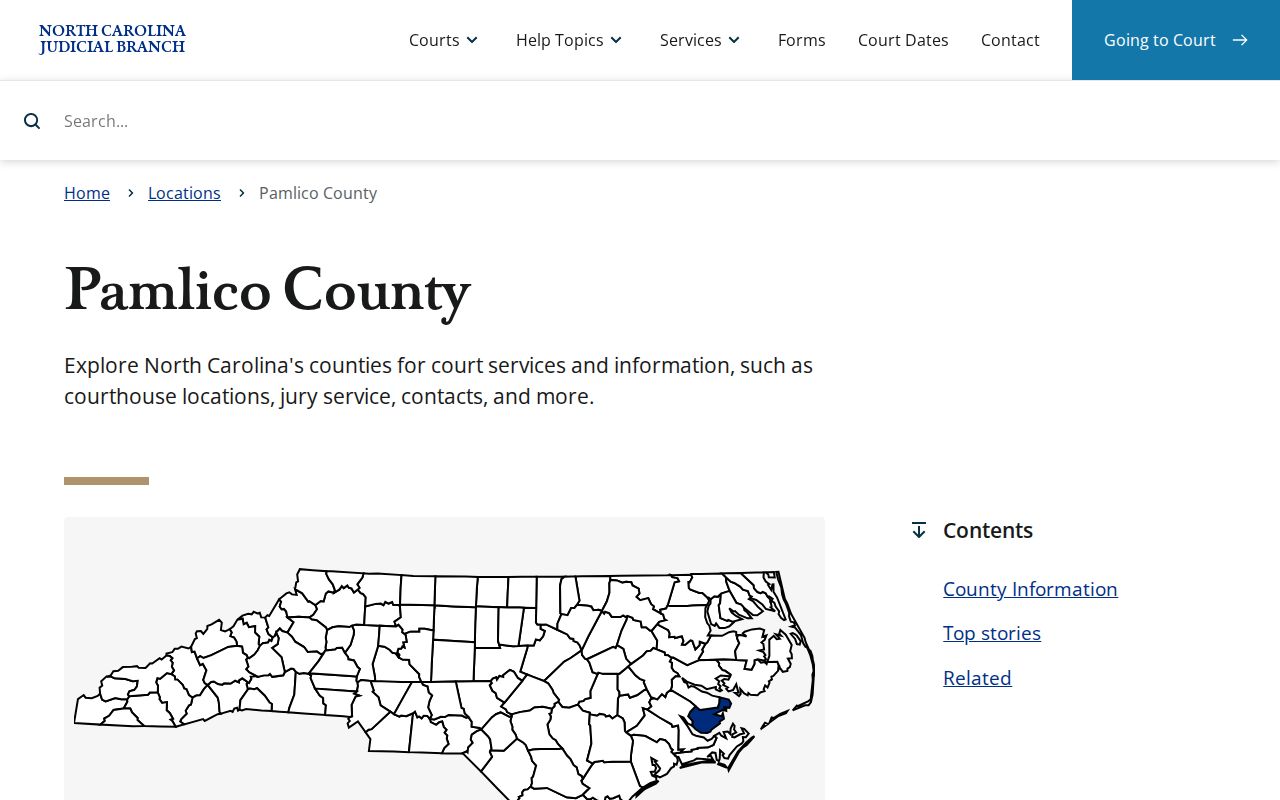
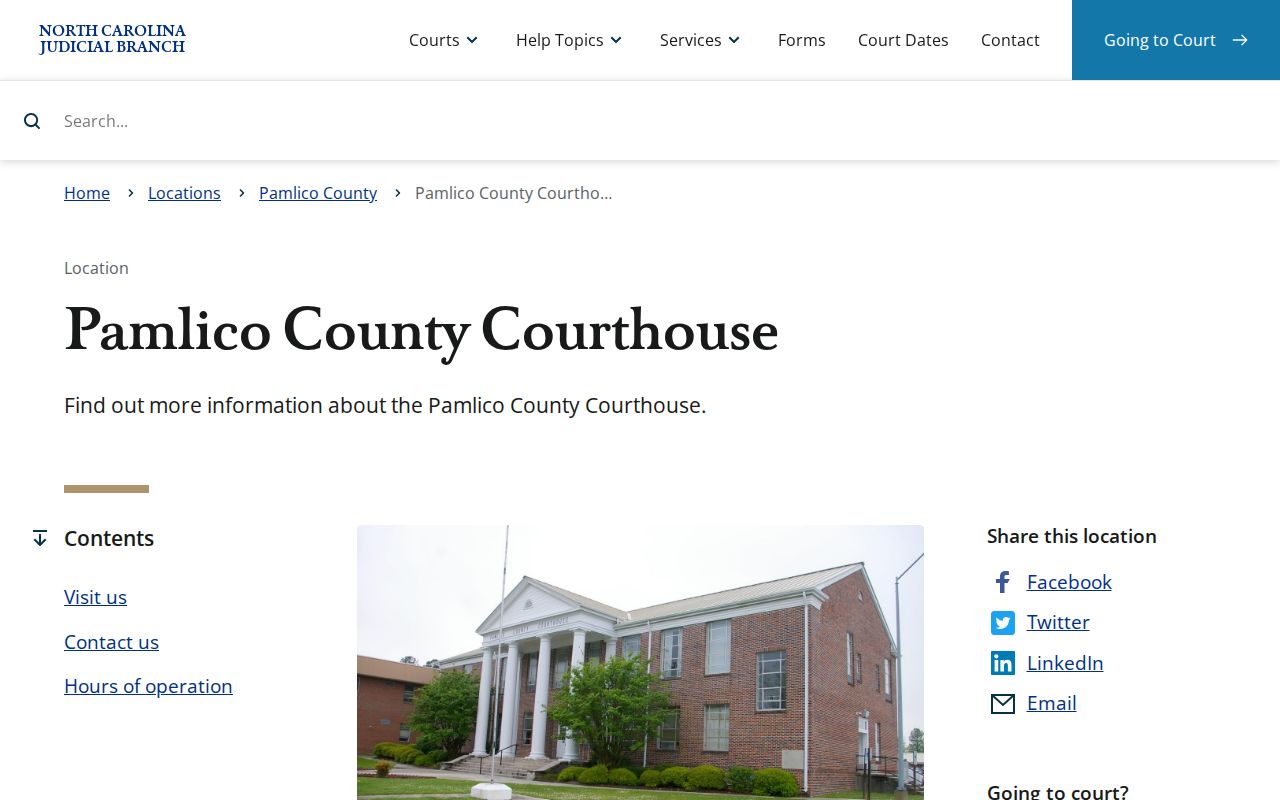
That state Judicial Branch landing page runs court access for Pamlico County rather than a county-owned site. The official courthouse page posts the Bayboro location, mailing address, main phone line, and regular hours.
For any local record question, one clerk office handles it. The Pamlico contact directory lists the clerk, coordinator, magistrate, and other court contacts.
There is no separate district-clerk office here. The clerk's published main line is the right number for Pamlico court-record questions.
Pamlico Clerk or Portal Records
The North Carolina eCourts Portal is the free online starting point. It offers public Case Summaries and Registers of Actions. These help identify a case, its events, hearings, dispositions, and any public financial details. But the Portal FAQ draws a firm line: Portal is not the official court record. For an official or certified copy of a Pamlico court document, ask the Pamlico Clerk.
| Route | Use it for | Do not treat it as |
|---|---|---|
| Portal Smart Search | Available public case information | An official or certified copy |
| Portal Search Hearings | Current hearing location and time searches | A permanent calendar record |
| Pamlico Clerk | Local files, inspection, copies, and certifications | A guarantee that restricted material is public |
| NCAOC records form | Existing Judicial Branch agency records | A Pamlico case-file ordering form |
Portal training and resources walks through Smart Search, Search Hearings, NC Judgment Search, and Make Payments.
Those Portal functions serve the public, yet the clerk still keeps the official file. North Carolina eCourts explains the statewide Enterprise Justice and Portal framework.
Pamlico's online case view is one piece of a statewide service. The Track 7 eCourts release documents Pamlico's February 3, 2025 conversion.
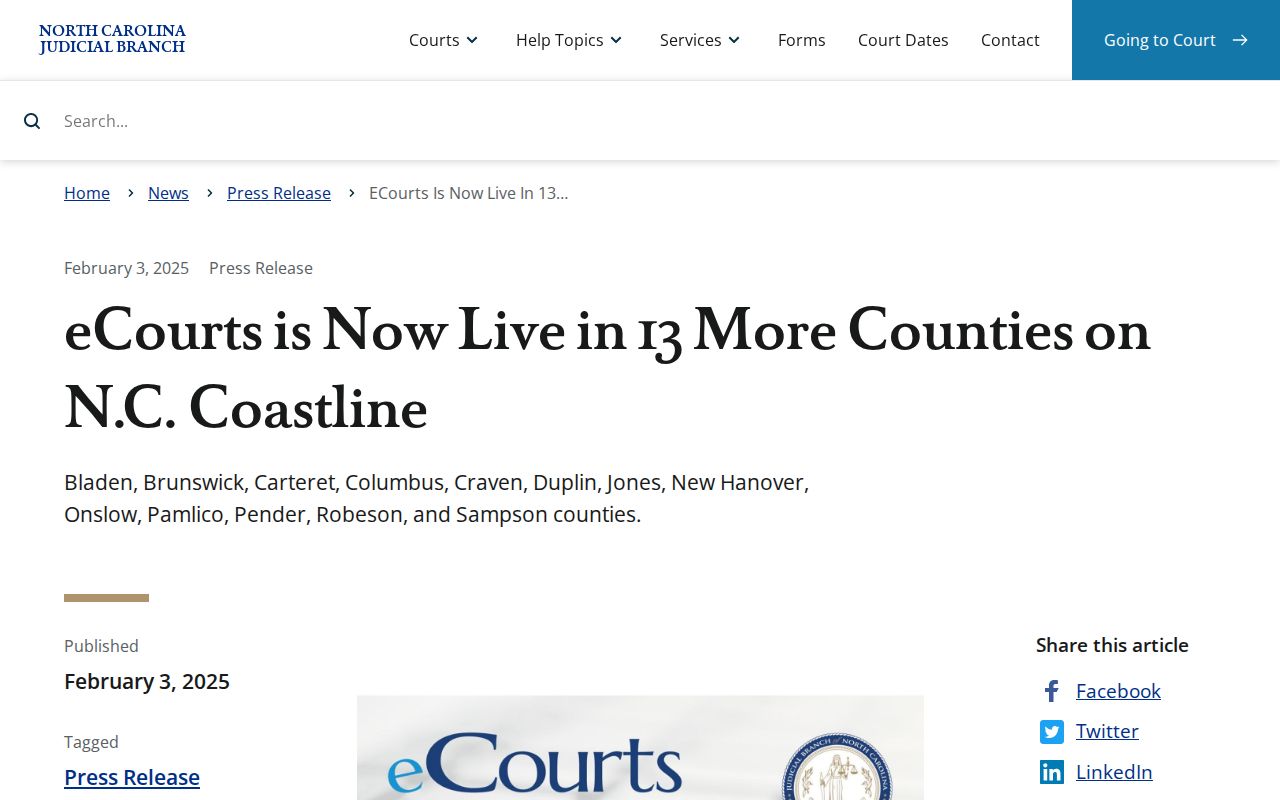
That milestone changed how new filings reach the screen. Older legacy files still sit with the clerk, under the records rules that apply.
Court Record Types
A Pamlico request can cover many products. The list includes a public Case Summary, a paper file, an ordinary copy, a clerk certification, an exemplification, an audio recording, a transcript, an estate record, a special proceeding, or calendar material. The right path depends on what you ask for. A Portal summary might identify the case. A certificate under seal and an exemplification are clerk-issued products. Audio and confidential transcripts follow their own court forms and rules.
Pamlico sits inside the North Carolina General Court of Justice. Superior Court takes felony matters, larger civil cases, and appeals from District Court. District Court handles misdemeanors, infractions, domestic matters, and smaller civil claims. One unified Pamlico Clerk keeps the files for both divisions.
The Judicial Branch court-types page lays out Superior Court, District Court, magistrates, and the appellate structure.
No municipal court records office exists for Pamlico County; the division split explains the workload instead. North Carolina court officials guidance explains the Clerk of Superior Court's recordkeeping role.
That role is why one Pamlico Clerk office serves both trial divisions. Note: Pin down the exact Pamlico court document before requesting a copy, certificate, recording, transcript, or calendar material.
Pamlico Court Record Inspection
Every clerk's office in North Carolina has a public self-service terminal. On it, criminal searches run by defendant, case number, victim, or witness name. Civil, estate, and special-proceeding searches are also available. It's the in-person fallback when Portal shows no public view of a case. Paper files must be viewed at the clerk office. That office sits in the county where the case sits. The terminal is for public material only; confidential records stay off it. The Judicial Branch court-records guidance describes the terminal, paper-file, copy, transcript, and recording routes.
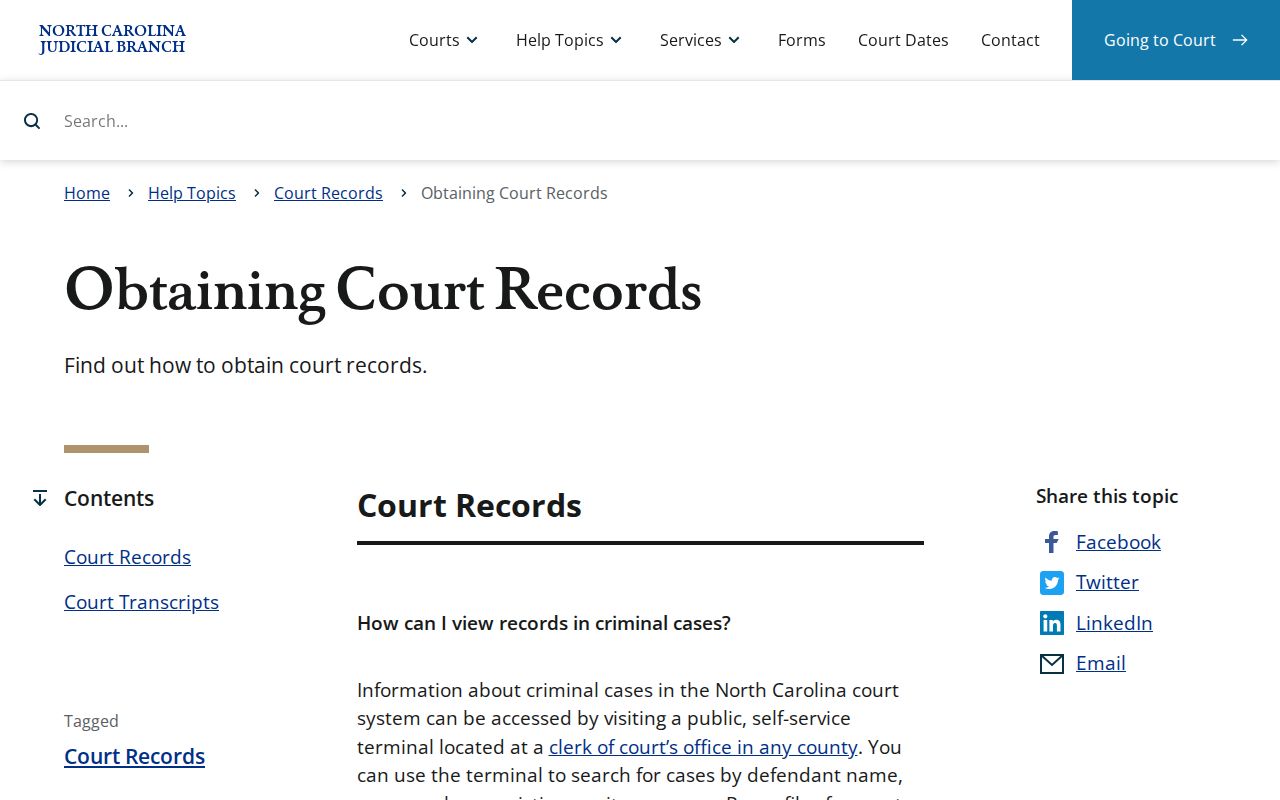
That guidance is the official word on the clerk-terminal and paper-file fallback for Pamlico court records. Pamlico's civil calendar endpoint posts current civil calendar material through the state service.
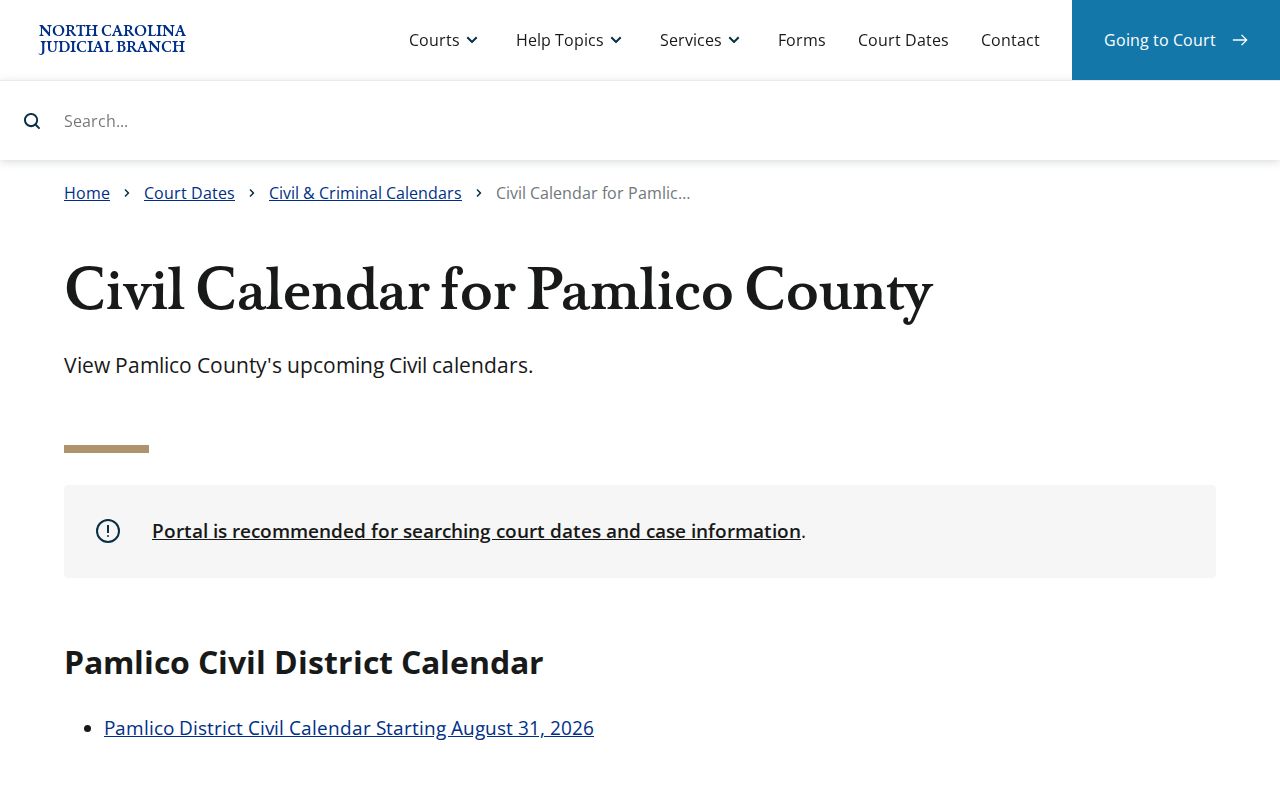
A current schedule is handy, but it is not the court file itself. Pamlico's criminal calendar endpoint gives the separate criminal calendar view.
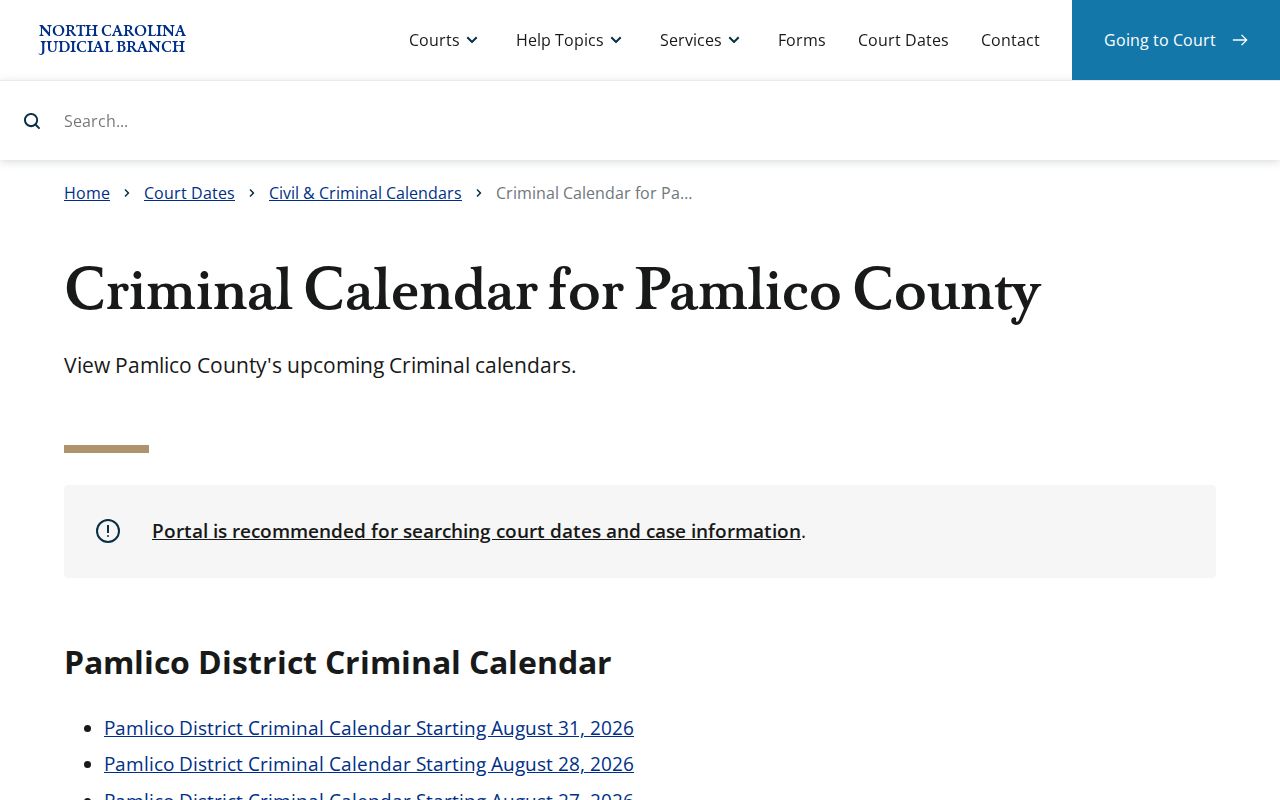
Check today's settings there; request past documents from the clerk. Current calendars and closed case papers are two different things.
Inside a Pamlico County Court Record
A Portal Case Summary can carry a lot of detail. It may list case information, the assignment, and the parties. Causes of action may appear where applicable. So may case events, dispositions, hearings, and financial information. A full Pamlico County court file is a different animal. It can hold materials the summary skips, and some of it carries access limits. So ask the clerk for the specific document or record type you need. A request framed that way works better. It beats assuming the whole file is public or ready on the spot.
| Case Summary | Public Portal overview or Register of Actions when available. |
|---|---|
| Events | Recorded activity in the available case history. |
| Hearings | Hearing information that may appear in public case data. |
| Disposition | Recorded case outcome or status when applicable. |
| Official copy | A document supplied by the clerk, rather than an uncertified Portal display. |
Pamlico local administrative schedules gather current calendar links and related materials.
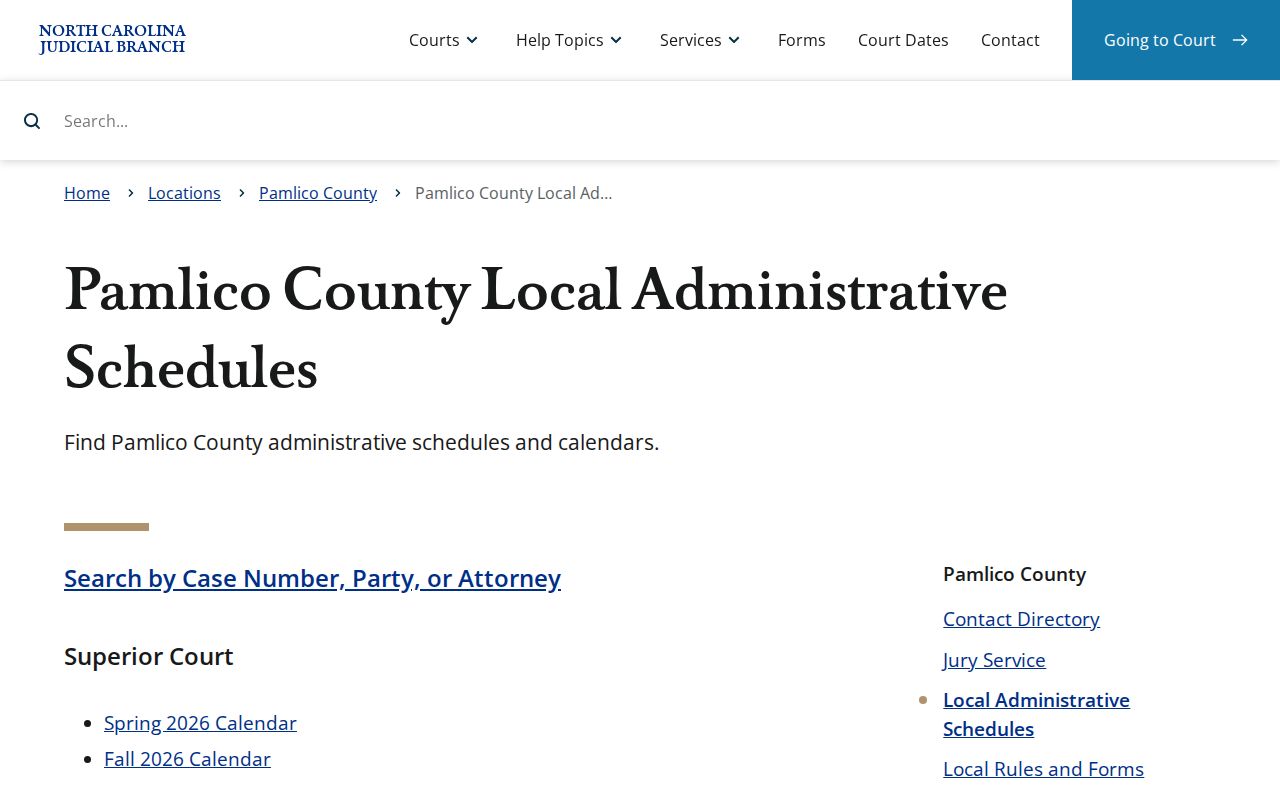
Session schedules help you spot a current calendar. They do not prove that a calendar lists every document sitting in a court file. For the local civil case-management and calendar materials, Pamlico local rules and forms is the place to look.
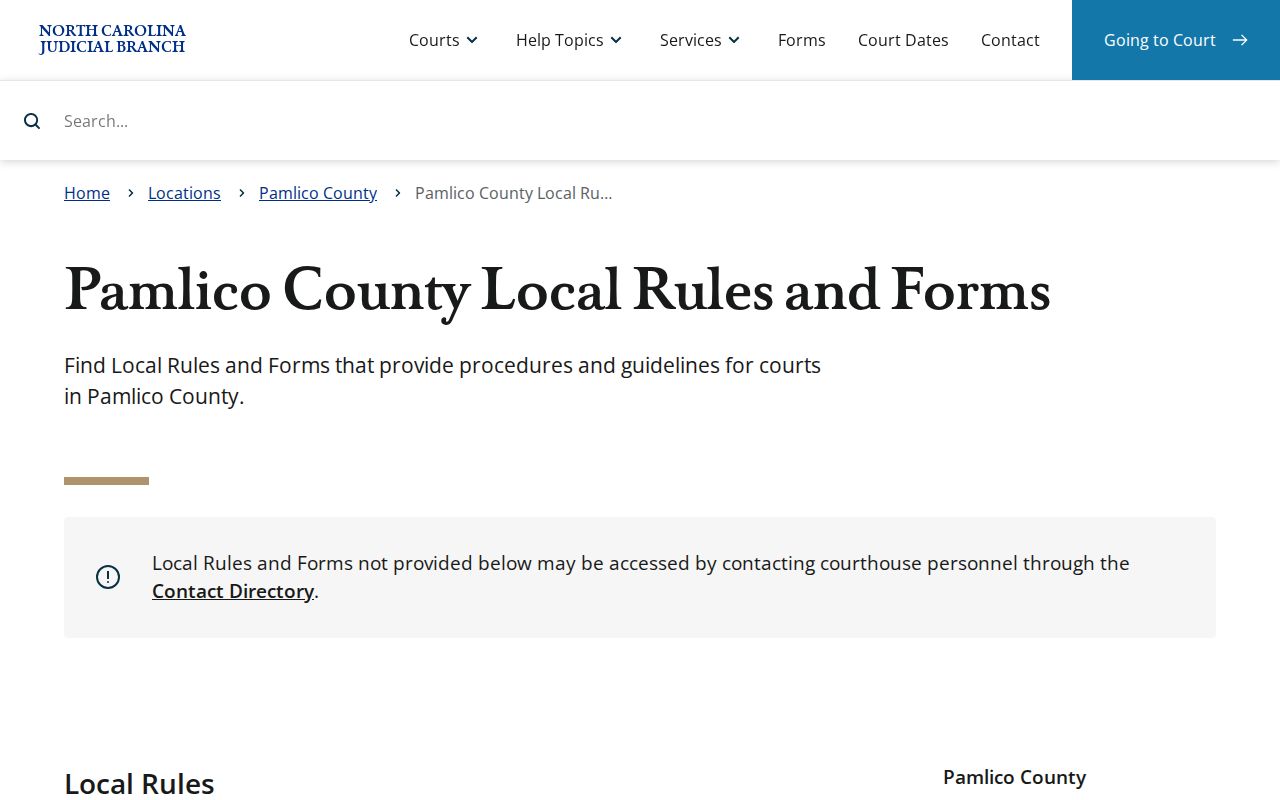
That local-rules page helps someone hunting current Pamlico County court materials. It says nothing about which documents are actually available. The NCAOC public-record request form covers the separate statewide route for agency records.
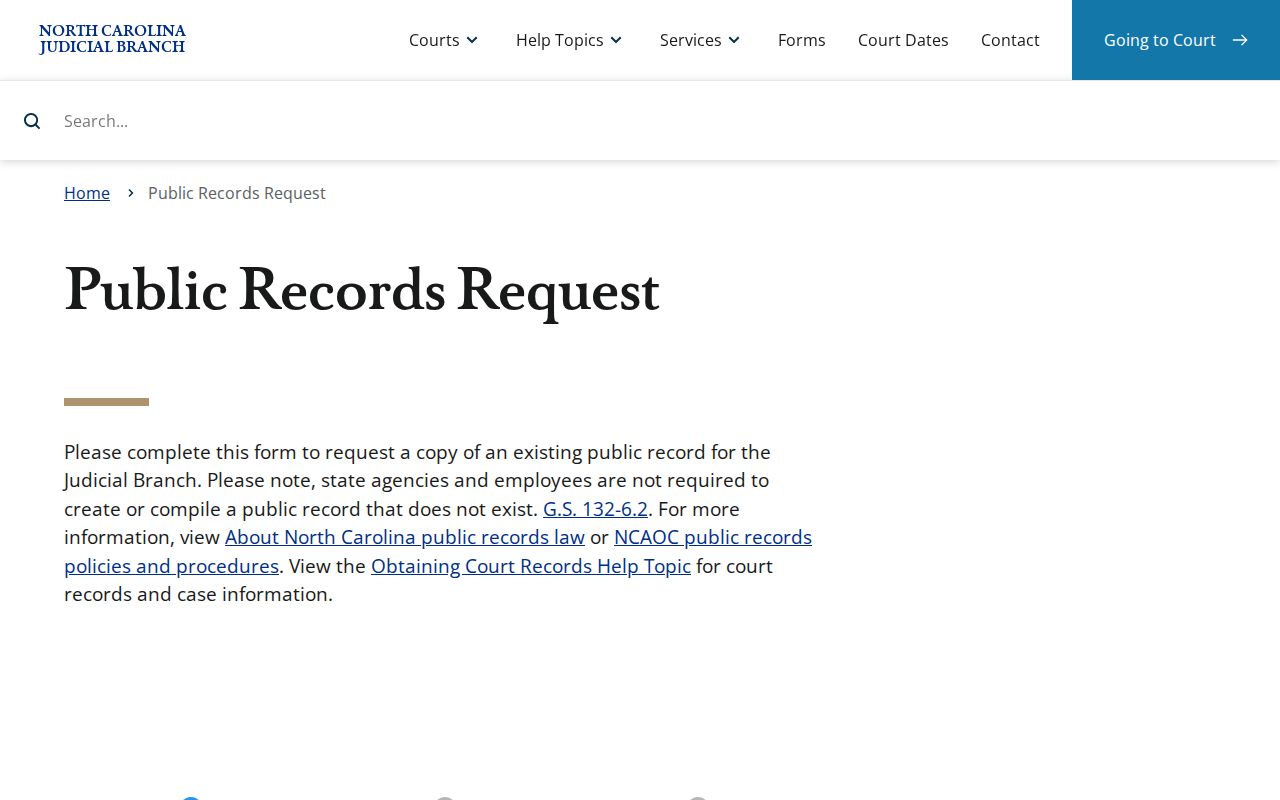
That form belongs to Judicial Branch agency records. It is not the form for ordering a Pamlico court case file.
Pamlico Court Copy Requests
An official-copy request starts with the Pamlico Clerk. Bring the case number, case name, document description, and the copy type you want. The clerk posts no county-specific public form for routine court-file copies or certified copies, so call or visit to confirm the current total and how pickup or delivery works. Skip any assumed online upload, email option, or turnaround promise. The statewide public-record request only reaches existing NCAOC or Judicial Branch agency records. It cannot shift custody of a Pamlico court case file from the Clerk to NCAOC. North Carolina Public Records Law sets a baseline for existing public records, but it will not open a restricted record or conjure one that never existed. NCAOC public-record policies and procedures sends local case-document requests to the clerk in the county where the case was filed.
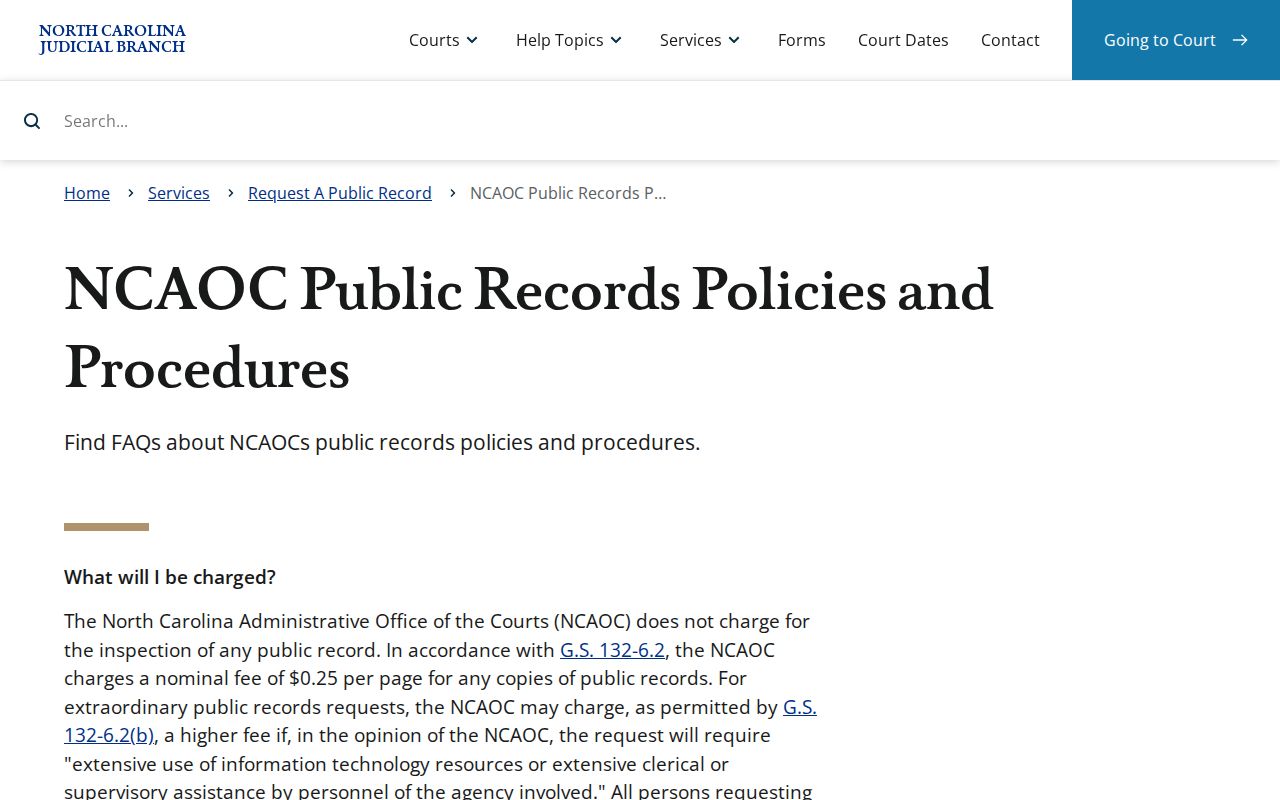
That policy page backs the local-custodian line: a Pamlico court document lives with the clerk. The Judicial Branch public-record request page explains the agency-record route and where its authority stops.
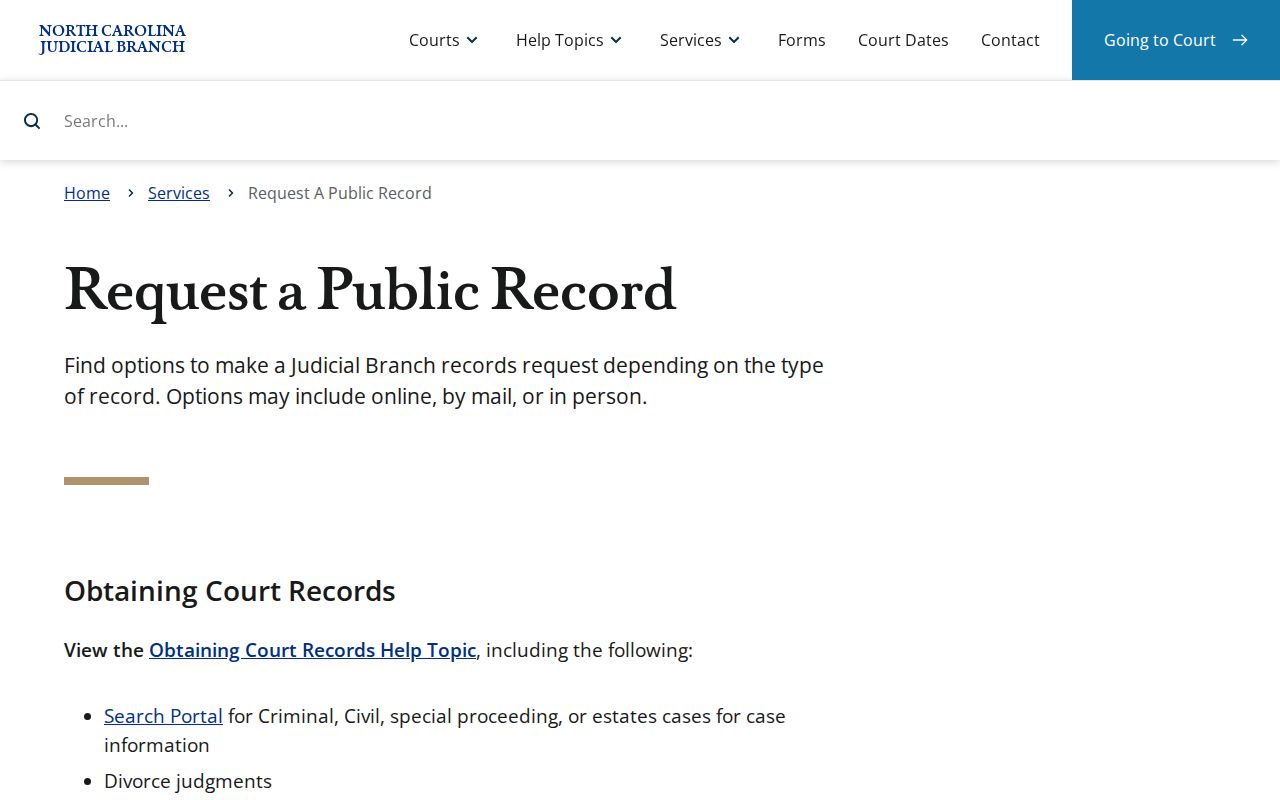
In short, an administrative-record request never substitutes for a clerk request on a Pamlico case file. G.S. 7A-308 sets the fee schedule. It covers clerk charges for copies, certificates, and exemplifications.
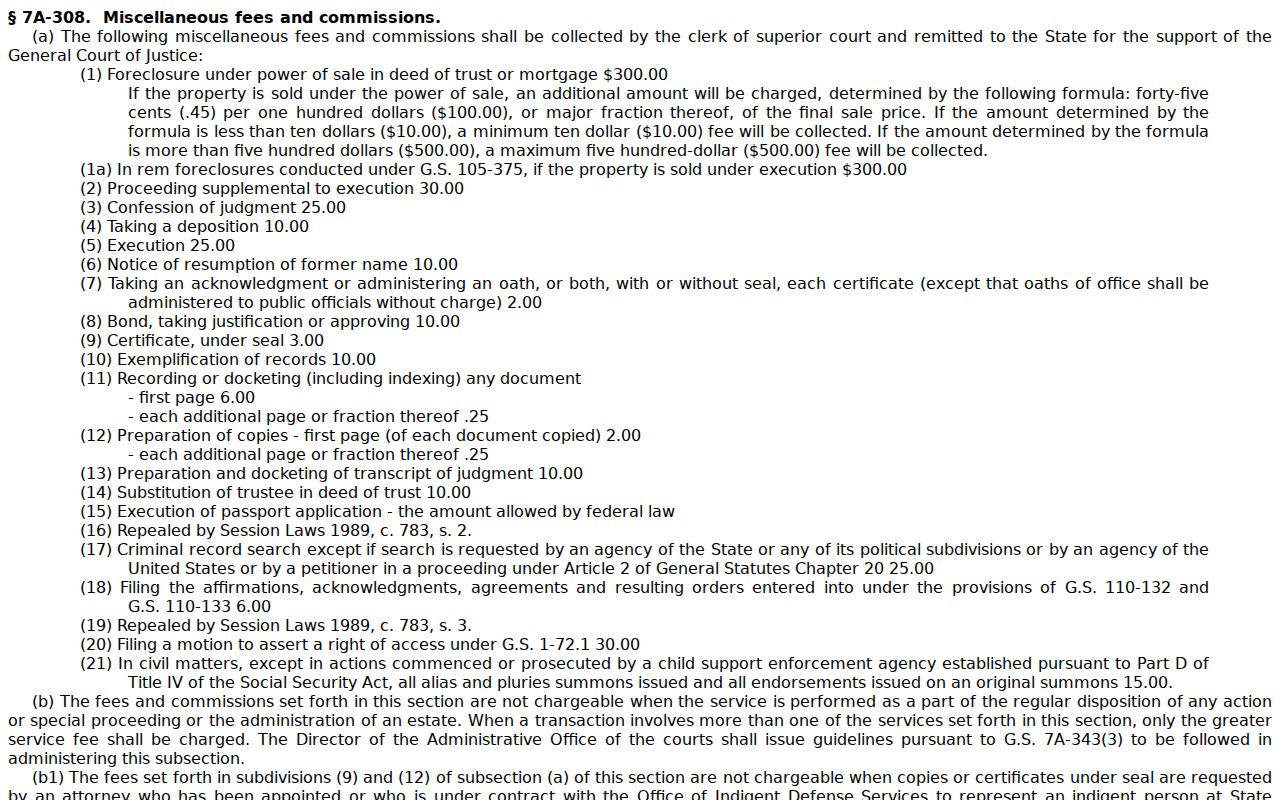
That statute is the source for the clerk fees listed below, and it stands apart from the separate NCAOC agency-copy policy. Keep the two straight. Note: A local case number and document description help the Pamlico Clerk find the right file and calculate any applicable fee.
Fees and Certified Copies
Here is what G.S. 7A-308 charges. Clerk-prepared copies run $2 for the first page of each document, then $0.25 for each additional page or fraction. A certificate under seal costs $3. An exemplification is $10. The Pamlico Clerk offers no online certified-copy order form and publishes no processing estimate, so confirm the document, the total, and how payment is collected before you plan around it.
| Clerk product | Statutory fee | Meaning |
|---|---|---|
| First page of clerk-prepared copy | $2.00 | Applies to each document. |
| Additional page or fraction | $0.25 | Additional clerk-prepared copy pages. |
| Certificate under seal | $3.00 | Clerk certification product. |
| Exemplification | $10.00 | More formal clerk authentication. |
NCAOC's 25-cent agency-copy policy sits in a different custodial context. A Portal download is not automatically a certified copy. The Clerk, not the live payment service, sets what a specific record request costs.
Pamlico Court Audio Requests
Want a nonconfidential verbatim audio court record? File form AOC-G-114 with the clerk in the county where the case was heard. The form covers the county, case name and number. It also asks for the proceeding date, judge or clerk, courtroom, and your own details. It spells out the actual blank-media cost. The delivery or media options are on it too. Not every proceeding has an obtainable recording, and juvenile or confidential matters are excluded. The AOC-G-114 form page is the official source for this request.
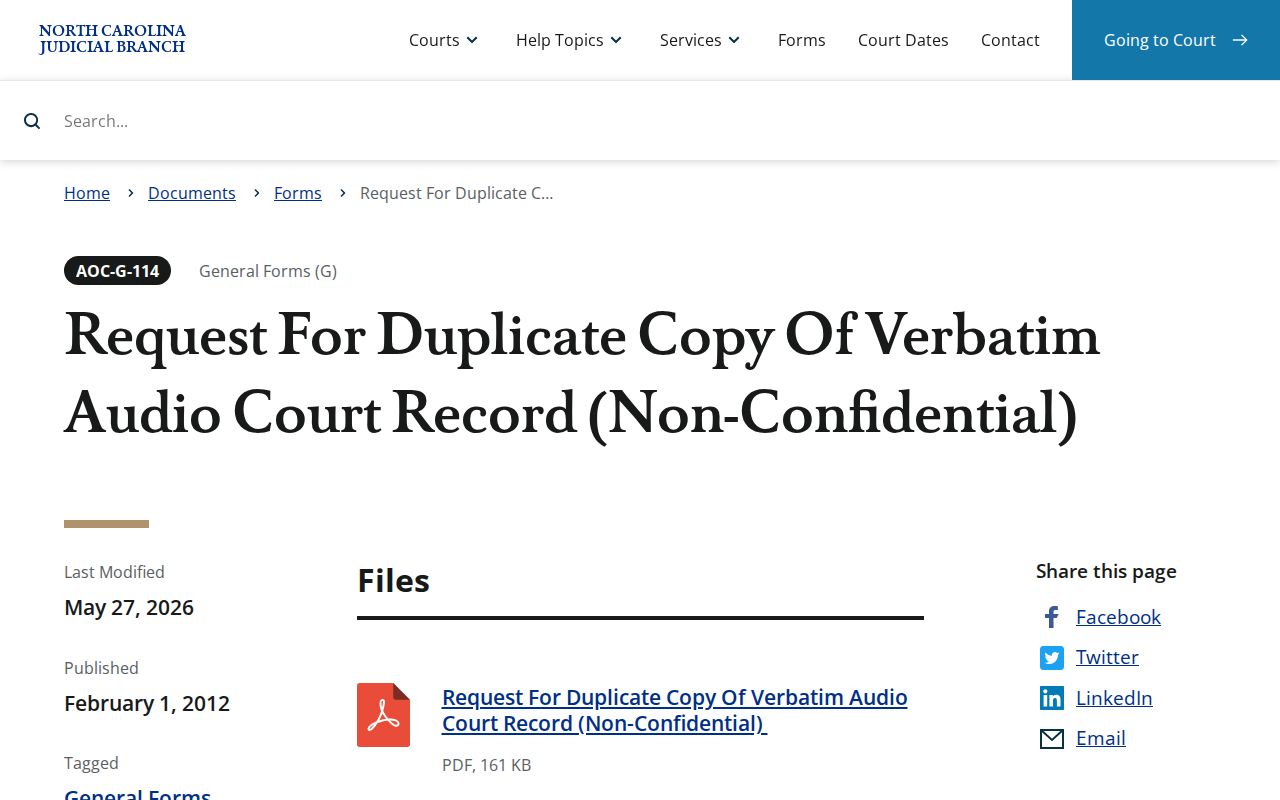
That form page confirms the narrow route: one available nonconfidential recording at a time. A confidential proceeding needs court permission instead, through AOC-G-115.
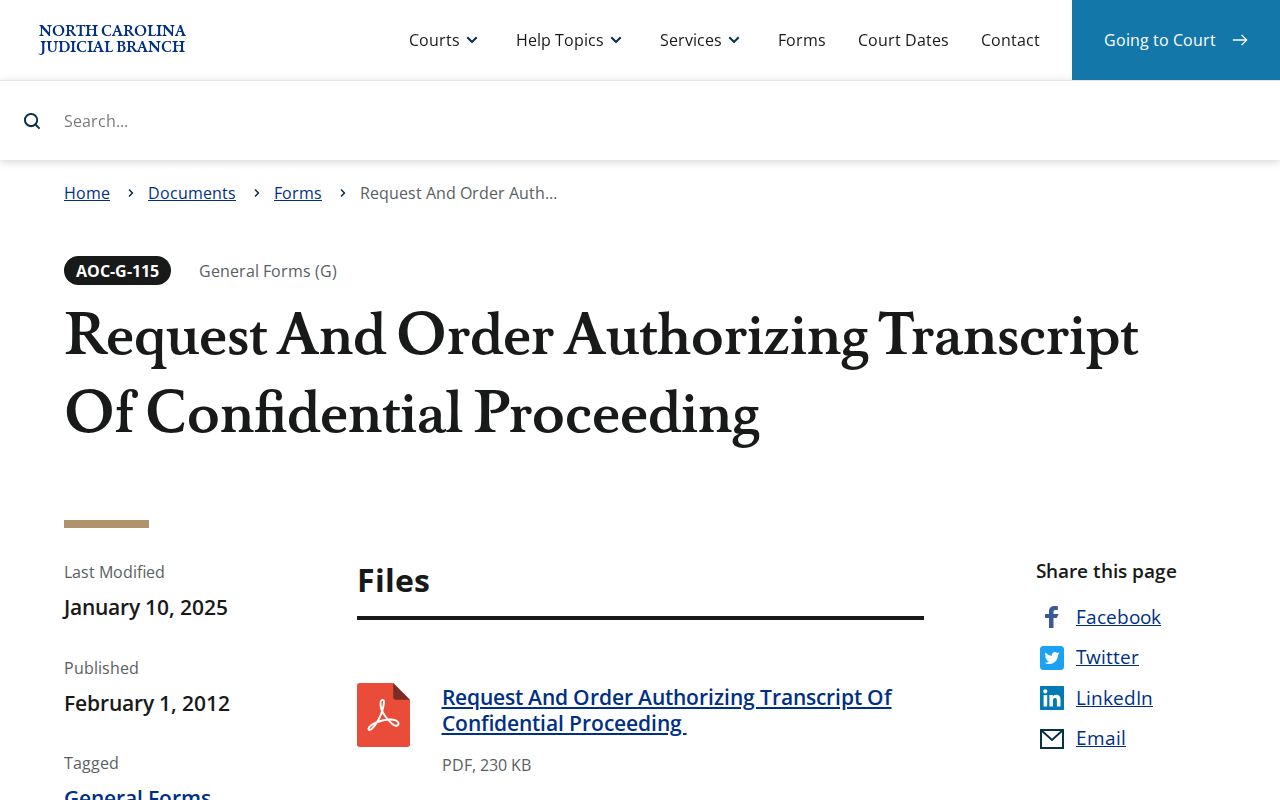
A judge's authorization controls access to confidential proceedings. Public request alone is not enough. The confidentiality terms govern.
Sealed Records and Public Access
G.S. 7A-109 opens court records and indexes to public inspection unless law forbids it. Remote electronic access faces its own restrictions. Juvenile court records stay confidential under G.S. 7B-3000. Records involving abuse, neglect, and dependency get separate protection through G.S. 7B-2901. Neither the Portal's public view nor a clerk request can sweep aside a court order or a statute-based limit.
Access is record-specific: Portal materials also identify unreturned warrants, certain protective-order records, and confidential special proceedings as examples of restricted categories. A court order, statute, or other rule can control a particular record.
G.S. 132-1.10 offers a signed, no-fee clerk request. It can redact covered personal or financial details from court-record images that are public online. It is not a general record-removal tool. For anything else, the route follows the custodian of the specific record. North Carolina traffic-violations guidance is one example. It can point a ticket holder back to the right court process.
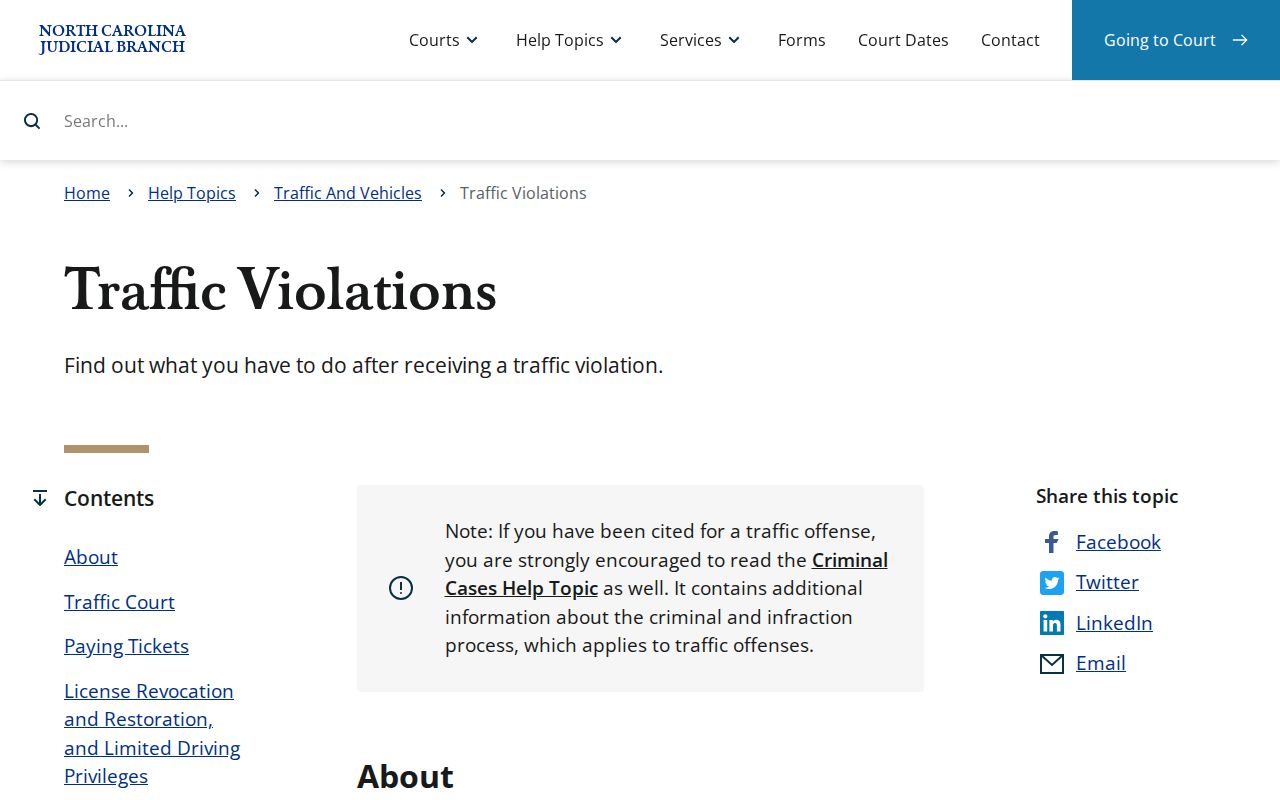
That traffic guidance covers court workflow only. It does not turn a Pamlico court record request into a motor-vehicle record request. NCDMV's license-suspension guidance describes a separate state compliance path that comes after a court matter is resolved.
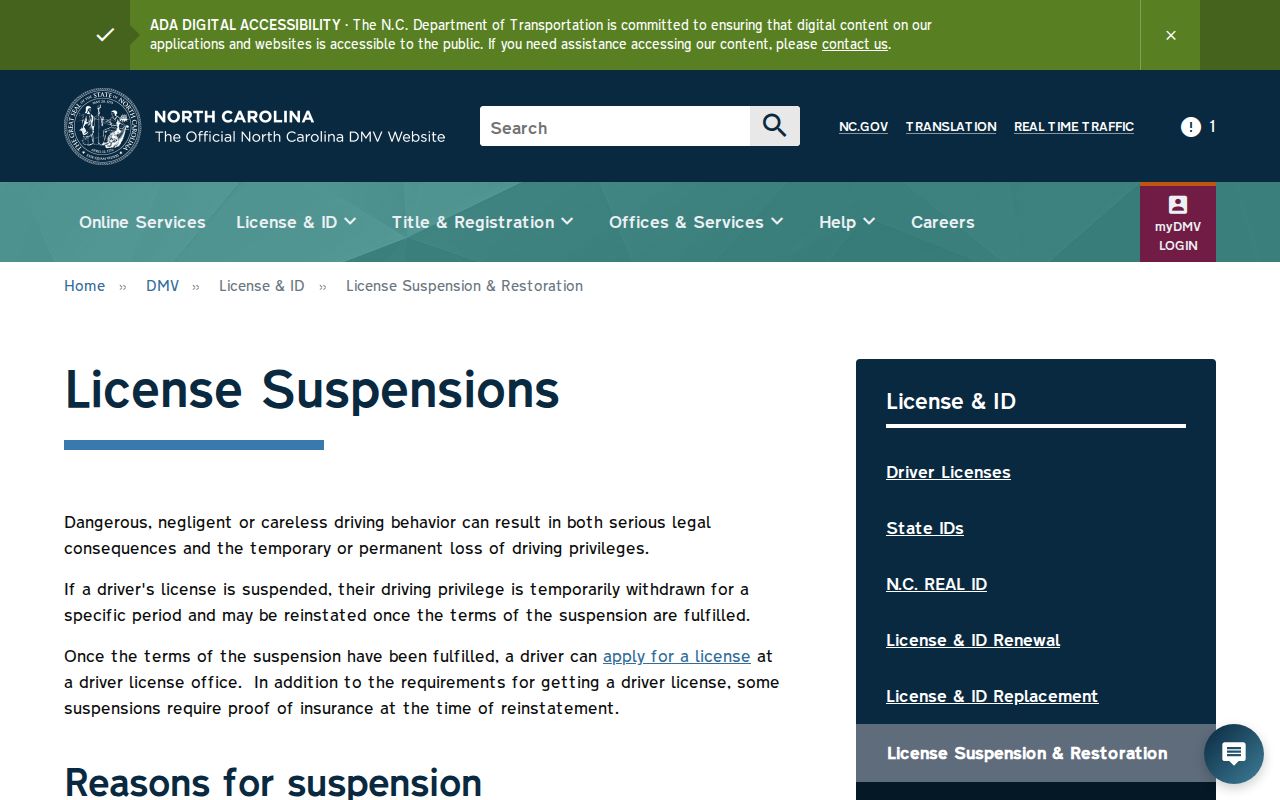
NCDMV is a separate agency resource. It does not hold your Pamlico traffic case file. Note: No public search or record request overrides a statute, court order, or confidentiality rule that limits access.
Pamlico Town Court Record Routes
Alliance, Grantsboro, Minnesott Beach, Oriental, and Bayboro share one court-record route. None of these five towns runs its own court. There is no town docket database, court-date system, or citation-payment portal either. A town office record is not a Pamlico court file. When a matter reaches state court, it belongs to District Court and the unified Clerk structure. The county docket is the only place to look. For local-government context only, Alliance's official town secretary page lists town contacts. These sit apart from any court function.
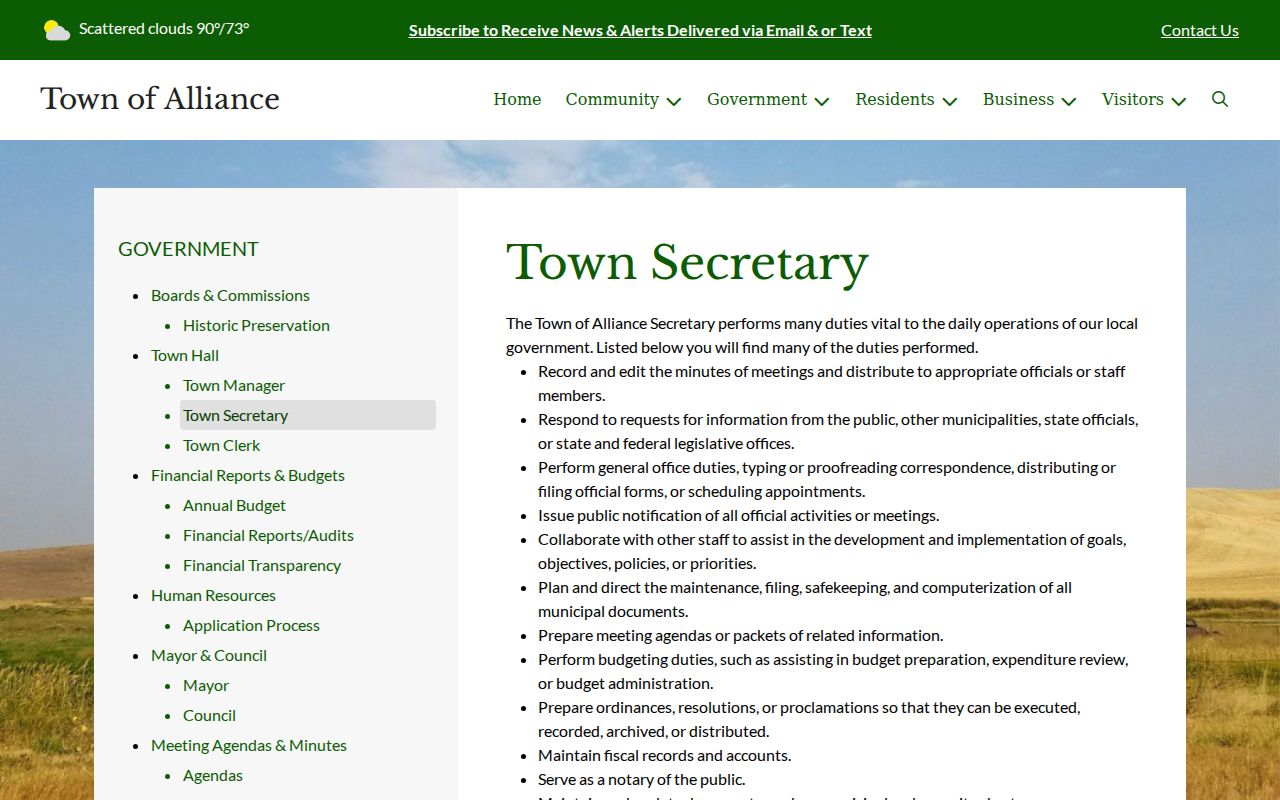
Alliance's page stays on the town-government side, while court records run through the Pamlico Clerk and the state Portal. Grantsboro's official contact page works the same way: it reaches town services, not court-record custody.
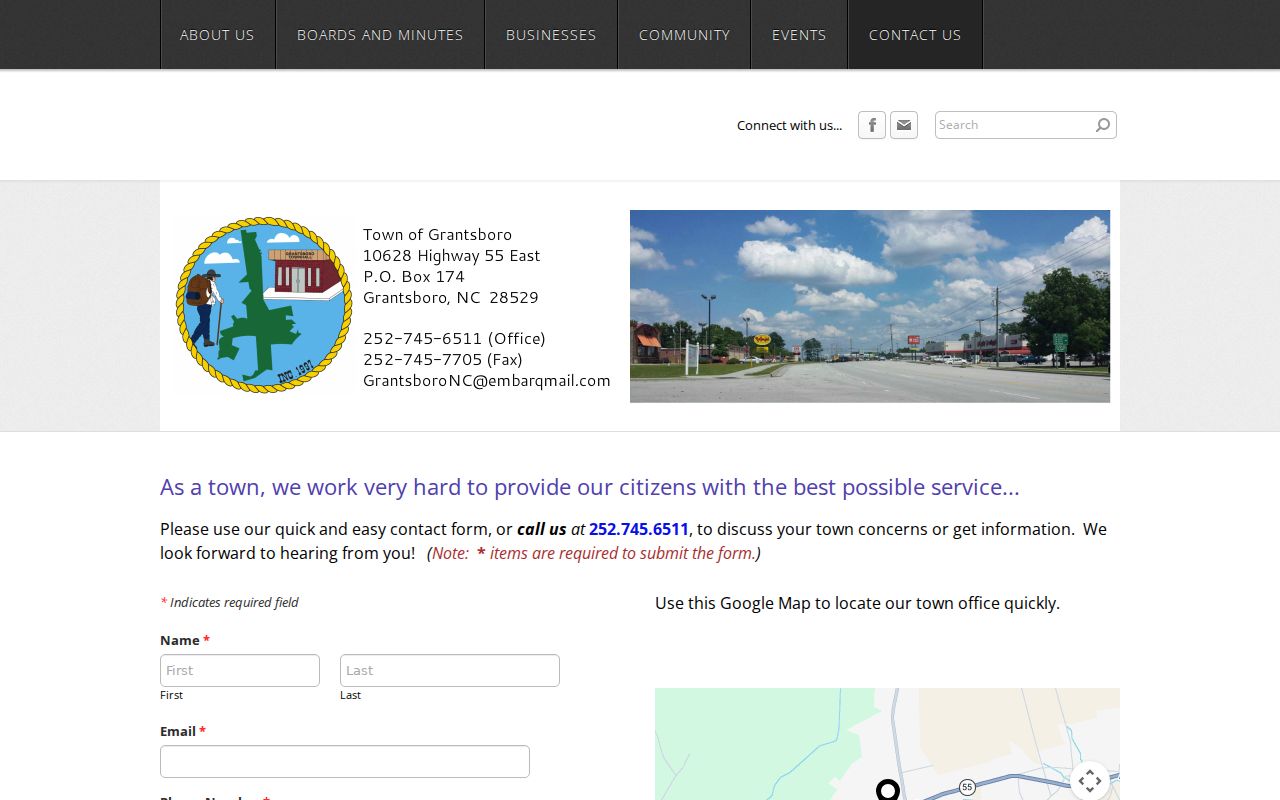
Grantsboro's contact listing covers municipal services, not docket access. In the same vein, Minnesott Beach's official town site offers town information with no court lookup attached.
Minnesott Beach belongs to the same pattern: a town-office resource with no role in Pamlico court records. Oriental's official government page provides local information rather than a court database of any kind.
Oriental's government page confirms the split: town context there, court documents with the Pamlico Clerk.
Pamlico Court Records by Town
By the 2020 Census incorporated-place ranking, Pamlico County's five target towns are these. They are Bayboro, Oriental, Alliance, Grantsboro, and Minnesott Beach. Population size does not shift court custody. The state judicial branch, not any municipal tier, handles Pamlico trial court access. A case filed in Pamlico stays with the Pamlico Clerk no matter which town its facts come from. For the underlying figures, the Census incorporated-place table helps. It gives the 2020 population vintage behind the ranking at the Census incorporated-place table.
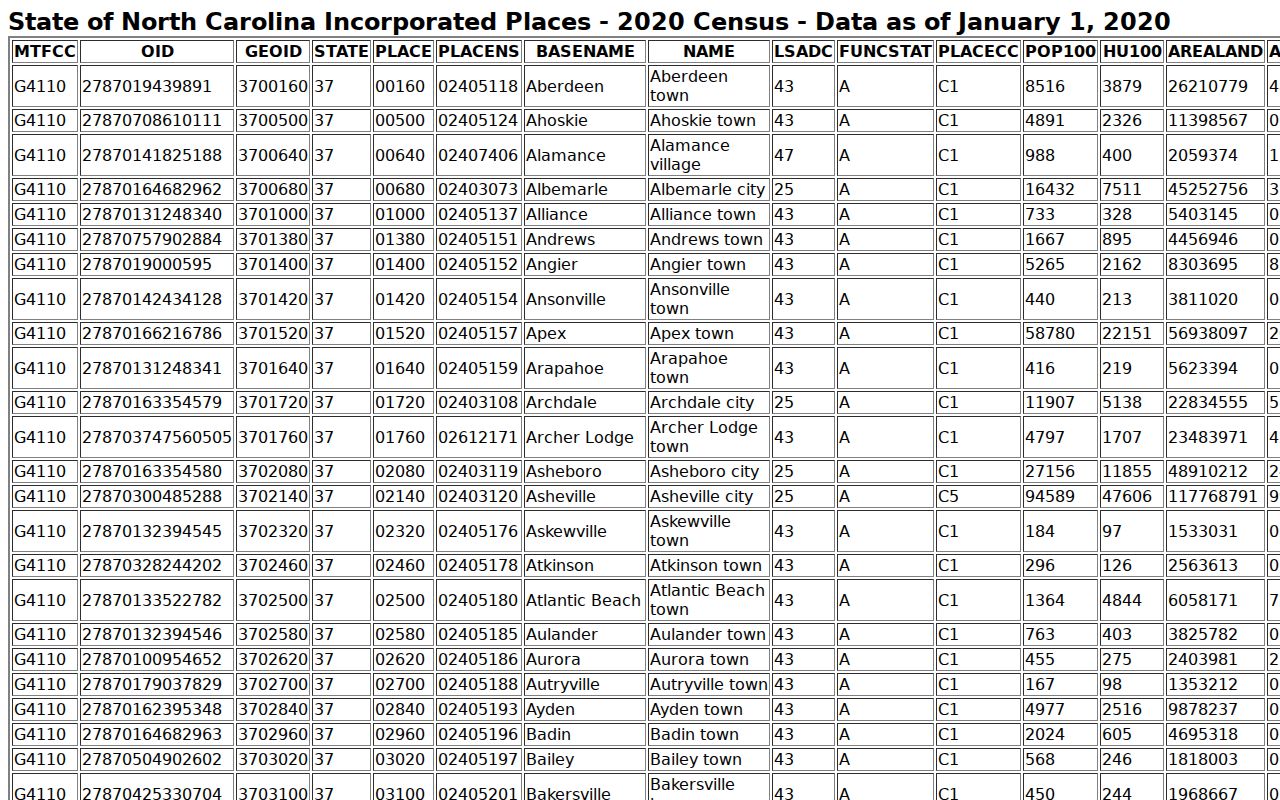
The Census table ranks the towns only; it names no separate town-court record custodian.
Pamlico Court Record History
Pamlico County was formed in 1872 out of Beaufort and Craven Counties. The State Archives finding aid reports no known significant loss of county records. It lists some transferred materials. That helps with historical research. It does not put the Archives in charge of a current docket, a certified court copy, or every clerk file. Start current access with Portal or the Pamlico Clerk. The 2025 eCourts cutover matters here too. Odyssey and Portal results can look different from paper-era research. A state resilience plan describes Hurricane Irene damage at the Bayboro courthouse complex. Treat older formats with care. Note: Ask the Pamlico Clerk about a specific historical court file. An online search may not reflect every legacy record.
Pamlico Federal Court Records
Federal cases live outside the state Portal and the Pamlico Clerk. Pamlico sits in the Eastern Division. That division is part of the U.S. District Court for the Eastern District of North Carolina. EDNC runs federal filing through CM/ECF. The public reaches federal docket and document access through PACER or federal public terminals. A Pamlico state court record search is not a federal case search. EDNC's county list shows which division each county falls under. That includes Pamlico.
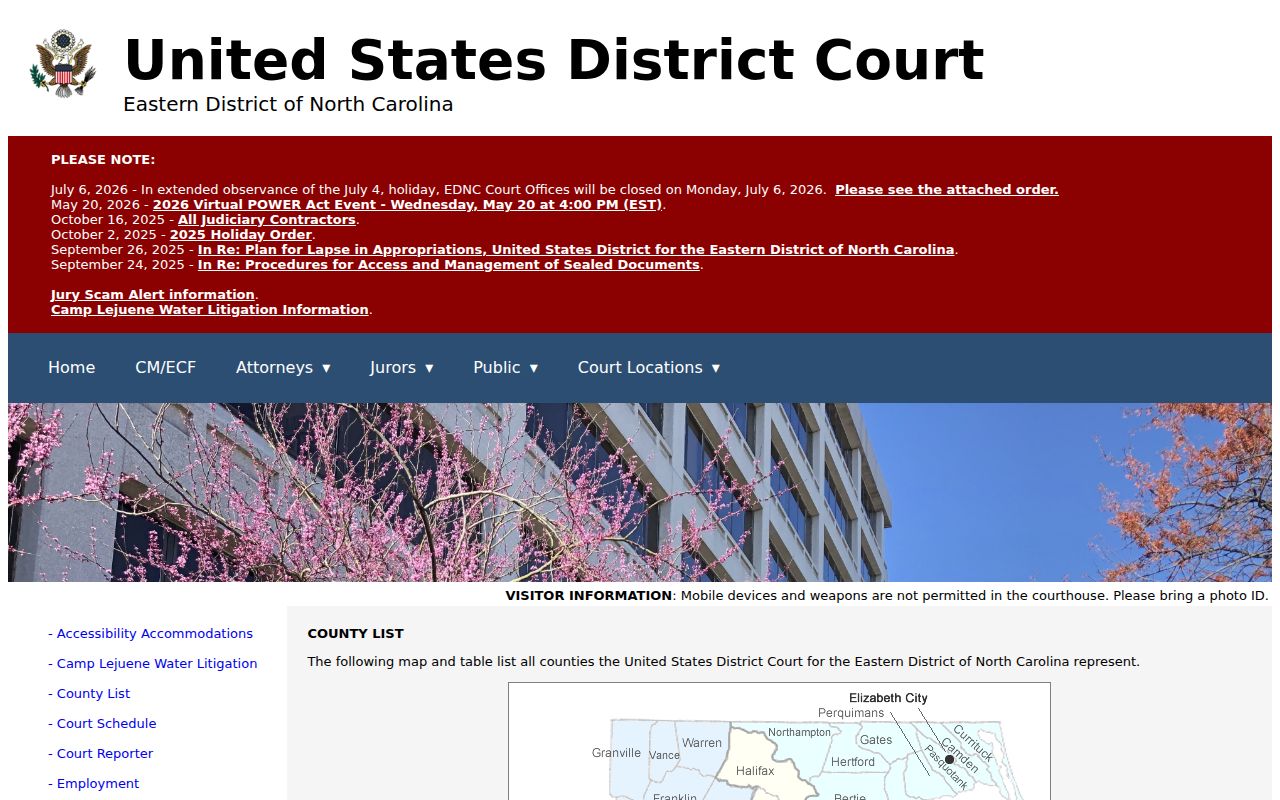
The EDNC county list settles the federal division question while state records stay with the Pamlico Clerk. PACER's fee FAQ explains remote access pricing and the quarterly waiver.
PACER pricing applies to federal court records alone, never to copies or certification from the Pamlico Clerk. For bankruptcy matters, EDNC Bankruptcy's PACER information points users to the federal system.
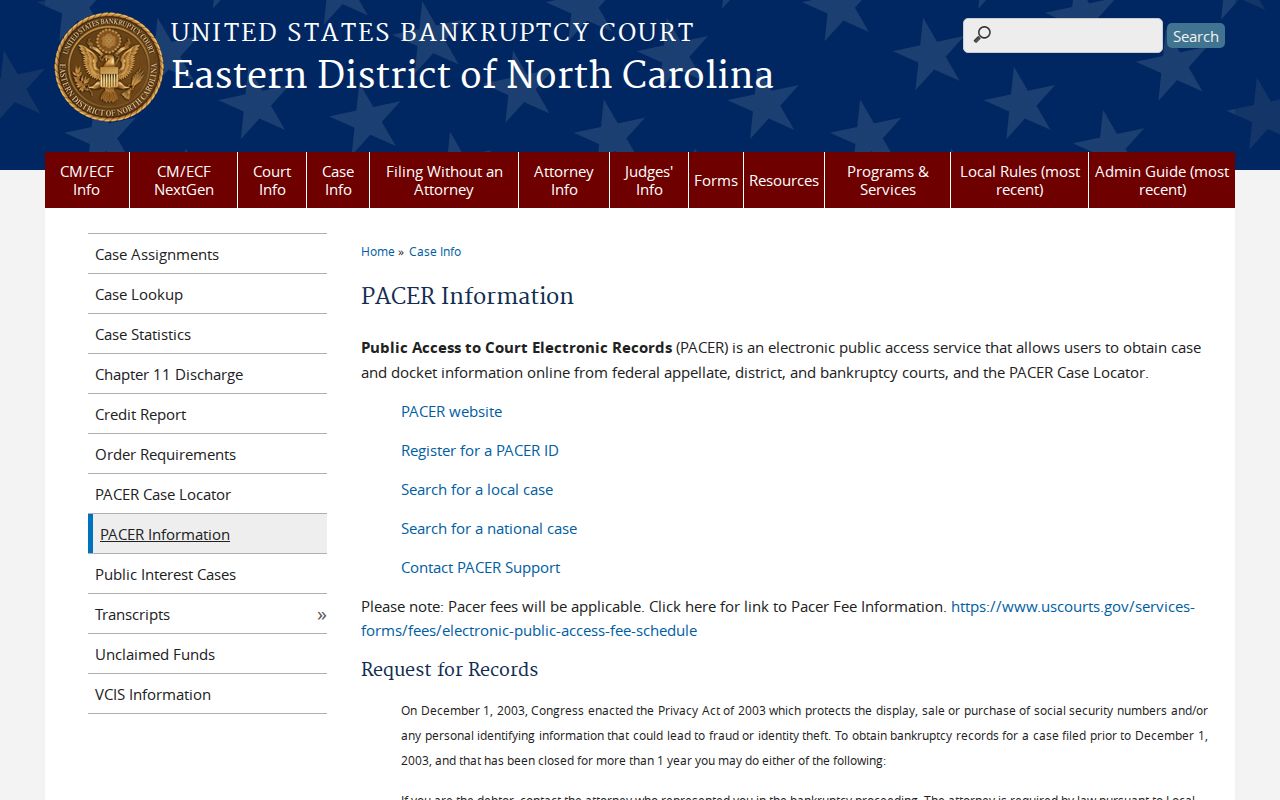
Bankruptcy is a federal branch of record access, not a service of Portal or the Pamlico Clerk. Note: Confirm whether a matter is state or federal before choosing Portal, the Pamlico Clerk, PACER, or a federal clerk office.
Pamlico Court Record Payment Limits
Pamlico's published payment page covers eligible court payments by cashier or mail. It posts no certified-copy workflow. That gap matters. Do not stretch traffic or case payment instructions into a copy request. Call the Clerk instead for the document type, the statutory fee calculation, and the accepted collection method, and see Pamlico payment information for the cashier and mail options.
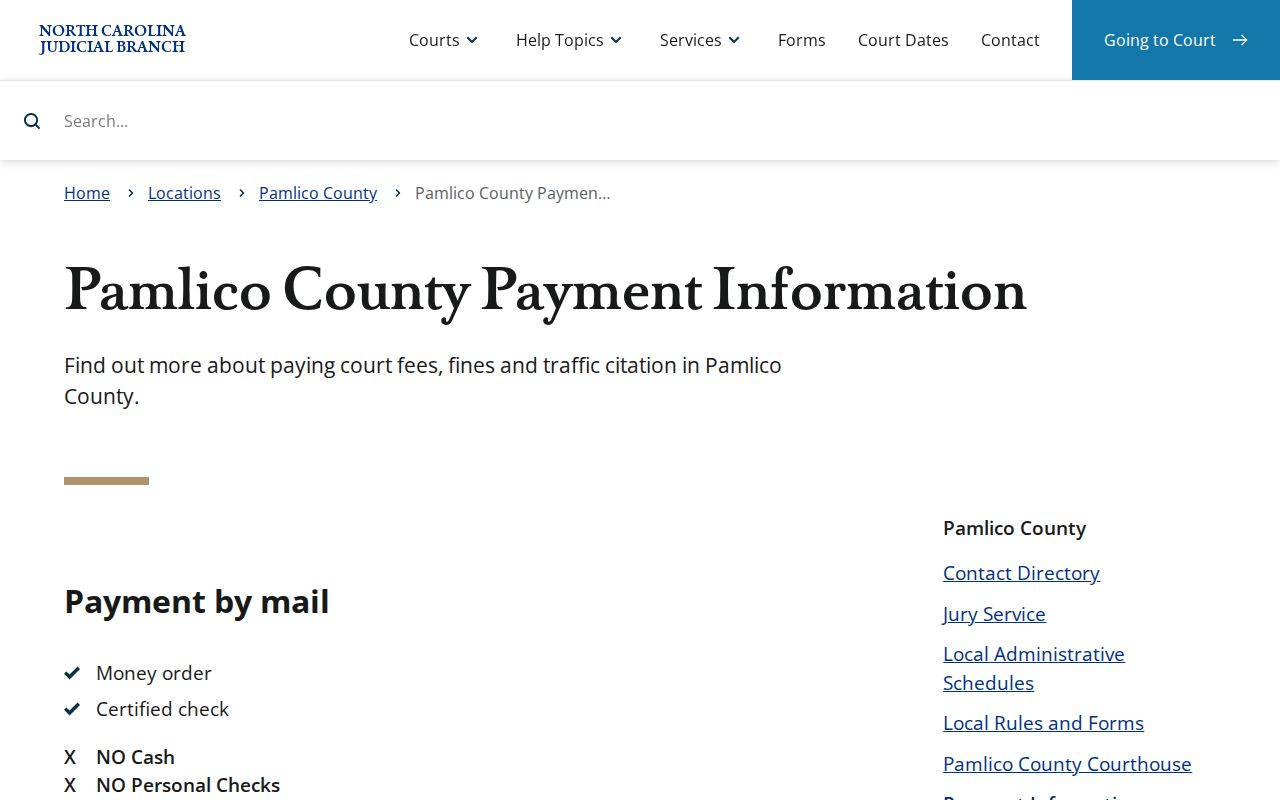
The payment page guides court payments only. It creates no online order method for Pamlico certified copies.